When Do I Become a Beaver?
When do I become a beaver?
That was the question left in my mind after watching this film.
The protagonist becomes a beaver when she wants to protect the original landscape of her own memories.
I think she is an environmental activist. Her actions ultimately protect animals and the natural environment.
But perhaps protecting plants and animals is only a byproduct of something more personal. For her, environmental protection may simply be a way of protecting the landscape tied to her memories.
From childhood, she struggled to keep pace with the people around her. The pond she visited with her grandmother, who understood her, the environment surrounding it, and the animals living there all became her emotional refuge.
When that pond is threatened by road construction, she begins a protest movement. But I think what she truly wanted to protect was not necessarily the beavers or the wildlife themselves. It was the precious place connected to the memories she shared with her grandmother.
Thinking About Environmental Activists
Before watching this movie, I had never thought very deeply about environmental activists.
I had read articles and watched news reports about environmental movements, but I accepted without much doubt the idea that environmental protection meant defending animals and nature harmed by human activity.
Of course, I was aware that some activists use excessive or socially disruptive methods. Still, I generally viewed environmental activism itself as something morally good.
What I had never really considered was the personal motivation behind those movements.
Activists are still individuals with their own histories and emotional backgrounds. Naturally, their motivations must differ from person to person.
Some people probably participate in environmental activism simply because they genuinely love animals and nature more than anything else. Others, like this protagonist, may be trying to protect their own emotional landscape — the scenery tied to their memories and identity.
Some environmental movements may be driven less by public good than by personal attachment or ego.
For me, that perspective felt fresh and surprisingly new.
Her Solitary Way of Fighting
Another thing that stood out to me was how completely she refused to rely on other people while negotiating with the government.
If someone is going to confront an institution as large as a city government, my instinct would be to gather allies first.
But the protagonist never even seems to consider that possibility until the mayor — who opposes her — tells her that he might reconsider if enough signatures are collected.
That felt very strange to me.
At the same time, this detail also suggests that preserving the pond was never truly a public movement for her. It was a deeply personal struggle. She does not seem motivated by abstract ideas of serving society or the public good.
And yet, the film also shows that she has struggled since childhood to connect smoothly with others. If that is the case, then organizing a social movement and coordinating with other people may simply be extraordinarily difficult for her.
Apathy Toward Environmental Protection
I also think this movie portrayed the public’s indifference toward environmental activism quite well.
Maybe “indifference” is not exactly the right word. It is more that almost nobody appears genuinely interested.
The crowds attending the public meetings — many of them supporters of the mayor — show little reaction to the protagonist’s speeches about environmental protection. Nobody seems emotionally moved.
In the end, the beavers’ habitat is preserved. But the reason is not emotional understanding or successful public dialogue.
Instead, people recognize the practical usefulness of the beavers’ dam after it helps prevent the spread of a wildfire.
It is an extremely rational, human-centered justification.
You could even argue that the ending is not the result of dialogue or compromise between people at all. It is simply a policy change caused by those in power changing their minds.
But More Than Anything Else, the Beavers Were Cute
Still, the main thing I wanted to say after watching this movie is very simple:
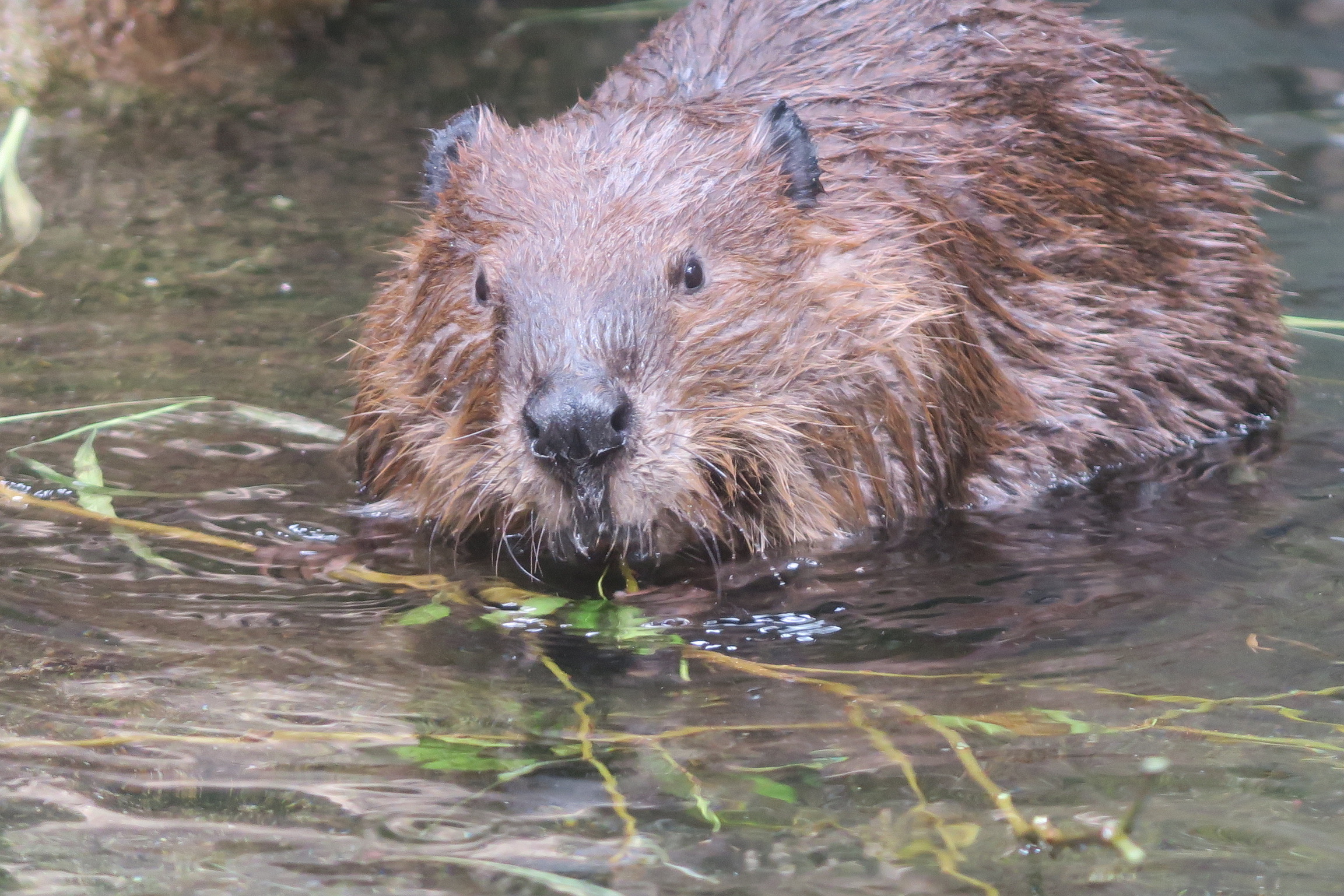
The beavers were adorable.
They were unbelievably cute.
Their glossy black eyes, especially during moments when they could not communicate through language, were incredibly expressive. Their round bodies were cute. Their large backsides were cute. Their flat tails were cute.
Everything about them was cute.